Grandma Gertie always said there's not a savory dish that can't be made tastier by just a touch of tarragon.

Tsunami and Me

Tsunami and Me
too big to escape now....

Sunday, July 22, 2018

Keep that Breathless Charm


From L, Steve's groomswomen, Trudy Whitener, & Randi Firus, Steve, Helayne,  Helayne's bridesmaids, sister Cheryl Ross and cousin Deborah Glasser Barr.
Helayne and her entourage
Last night my son, Steve Elders, promised Helayne Perry that, as suggested by four wise men half a century ago, he would love her eight days a week. Kevin Brief, Steve's friend since childhood, officiated. Both bride and groom read their own poignant vows.

Helayne, who met Steve when he went to work on the Register,  related how their friendship of nearly 30 years evolved. They'd always been close enough to know one another's interests, tastes and even secrets. When Steve first proposed the idea a little over a year ago that maybe they could become more, Helayne admitted she hesitated, wondering if as a couple they'd be able to reconcile her "emotionalism" with Steve's pragmatism. But the idea grew on her. They became engaged last August when they went to Oregon for the total eclipse of the sun.

Both Steve and Helayne have spent their professional lives in the daily newspaper business, Helayne as a graphics designer for the Orange County Register, and Steve as a copy editor for the Long Beach Press Telegram, the Daily News, the Orange County Register and for the past fifteen years as chief copy editor for the Los Angeles Times Sunday Calendar. Additionally, he'd been editor of the LBCC Viking and an editor for the Cal State Long Beach 49er. Friends from all these venues burst into cheers when Steve announced that he and Helayne shared a joint pride in their work as "enemies of the people."

 Not only the Beatles, but Dorothy Field's lyrics to Jerome Kern's haunting melody, got a nod as Steve referenced this song as reminding him of his bride:
Some day, when I'm awfully low
When the world is cold
I will feel a glow just thinking of you
And the way you look tonight
Yes, you're lovely, with your smile so warm
And your cheeks so soft
There is nothing for me but to love you
And the way you look tonight
With each word your tenderness grows
Tearin' my fear apart
And that laugh, wrinkles your nose
Touches my foolish heart
Lovely, never, never change
Keep that breathless charm
Won't you please arrange it?
'Cause I love you
Just the way you look tonight.
Kevin and Pam Brief
First dance with lot of kisses

Mother of the groom with escort, Dr. Frank Stern
Toasting the couple...Mazel Tov


Maria Laso and Terri Elders, "the moms."


Thursday, July 19, 2018

Still Coasting Along


Frank Stern, Fr. Junipero Serra, and me on my 81st birthday.
We'd been wanting to head north to Santa Barbara for months. Frank and I planned to go to Carpinteria last December to celebrate his 81st birthday. Instead, we finally got there in late June, to celebrate mine. Torrential rains and subsequent mudslides had intervened to ruin our earlier trip. 

What lured us up the coast? We wanted to sample another cheese bagel at Jack's Bistro and Famous Bagels on Carpinteria's main drag. We'd discovered Jack's on an earlier sojourn to San Luis Obispo. We wanted to meet my newly-discovered first cousin, Deborah Crawford Shafritz, at her synagogue, B'nai Brith, in Santa Barbara. And we wanted to explore more of the antique and secondhand shops that line the main drag in Ventura. Plus, Frank doubted he'd ever visited the Santa Barbara Mission. We did it all. 

Juan Rodriquez of Teddy's
On our first evening, we dined on fish and chips at Teddy's by the Sea, a newly-opened Carpinteria restaurant named after Sarah Rodriquez's grandmother, Theodora. We'd arrived late, just before closing, but Juan Rodriquez, our wonderful host, said the restaurant's policy was to remain open until everybody was fully served. I gobbled up a side of terrific pineapple slaw, and we accompanied our meal with a couple of mugs of Hoppy Poppy. a Santa Barbara brew. In honor of my birthday, Juan treated us to a very light flan, garnished with fresh raspberries.

The next morning we headed for downtown Santa Barbara, ostensibly to visit the art museum. We never got there. Instead we visited ducked into The Book Den, established 1902 in San Francisco but operating at this location since 1933. Frank and I, bibliophiles both, don't merely browse in bookstores. We both fade into a hypnotic trance, as we wander aisles all glassy-eyed and bemused. It takes a lot of clashing cymbals to snap us out of our daze.
Frank's cell phone rang, awakening us to the here-and-now. (A quick aside...it was a happy birthday call for me from Frank's son and daughter-in-law.)

We sauntered outside to head for the museum, but were distracted once more when we spied an intriguing sign announcing Karpeles Manuscript Museum. What kind of manuscripts could it possibly house? Just about everything, we learned, including a proposal draft of the Bill of Rights, the
Olympics Torch, 1936
Constitution of the Confederate States of America, key documents related to Charles Lindbergh's "heroic" trans-Atlantic solo flight, drafts from Darwin's Theory of Evolution, and even an original draft of Eva Duarte Peron's "La Razon de mi Vida." And that's just for starters.

There are photographs, sculptures and artifacts, on display, as well, including the Olympics torch from 1936 and a model of HMV Victory, and the weather log kept aboard it by Admiral Lord Nelson in the Battle of Trafalgar.

Sam Tanksley and Frank Stern
We learned from our well-informed guide, Sam Tanksley, who is one of four self-labeled  "attendants" who discuss the treasure of the museum with visitors,  that Dr. David Karpeles, born in Santa Barbara in 1936.  A research analyst who earned a fortune in real estate, he displays his collection of historical documents not only at this flagship museum in his hometown, but also in similar libraries in Buffalo, NY, Charleston, SC, Jacksonville, FL, Tacoma, WA, Duluth, MN, Shreveport, LA and Newburgh, NY. All are open to both scholars and the general public, with no admission charge. Frank and I will be traveling through Buffalo on our way to Ottawa in September and plan to drop in to that museum, as well.

Gardens, Mission Santa Barbara
We ducked out for lunch and decided to skip the art musuem in favor of driving to the mission instead. Glad we did. The gardens are gorgeous.  Visiting any of the California missions makes me reflect on how this state's development continues to fascinate me. I'd been to this one a time or two before, but I never tire of traipsing through California historical sites. I want to go back to once more see two historical museums and gardens in Long Beach now, Rancho Los Alamitos and Rancho Los Cerritos.


The next day, Friday, we went to Sabbath services in the lovely outdoors gazebo at Synagogue B'nai Brith. We enjoyed the "Salsa and Sangria" summery Pre-Neg and the service, led by Rabbi Cohen. And, of course, chatting with cousin Deborah and her husband, Brian. (Deborah's dad, my Uncle Howard, and my birth mother, Jeanne, were brother and sister. We found each other last year through correspondence with an international organist society. Our mutual grandfather had been Jesse Crawford, the Poet of the Organ.)

On Saturday we headed toward Orange County, stopping in Ventura to explore the downtown antique stores and dining at Main Street's Busy Bee, established 1963. It featured juke boxes at every table, with the hits of the Drifters, Diamonds and Paul Anka. Frank, a Coca Cola memorabilia collector, was taken with the Coke theme. Even the bicycle mounted above the front exit door had a Coke decal.

Our next trip north might be just as far as Los Angeles. Now I'm set on reminiscing over my tween years by going to Clifton's Cafeteria!  Not certain I want to wait for my 82nd birthday for that trek.


Sunday, July 1, 2018

Our Canadian Sunset


A few months ago this story closed a wonderful book, Table for Two. All day today I have been thinking of Ken Wilson and the day we married, July 1, 2000.

Our Canadian Sunset

By the time Ken and I flew to northeast Washington State to shop around for our future retirement home, I’d lived, worked, or traveled in exactly forty-nine countries. But I’d never set foot in Canada. A native Californian, I’d always envisioned our neighbor to the north as a kind of frozen wasteland dotted with icebergs and igloos. And now my husband of not too many years wanted to move to a county right next door, edging the Canadian border.

He’d explored the area solo a summer or two earlier, on the recommendation of his son who often had visited Stevens County to fish on the Colombia River or to play golf. And he’d liked what he’d seen.

“The Colville National Forest actually is high desert,” he’d explained, urging me to at least give the place a try. “Let’s consider it seriously. There’s four seasons, a fifth if you count Indian Summer. And I’d never let you freeze to death. I promise.”

Still, I’d read that temperatures plunged below zero in the winter, so that January I’d taken a week’s leave from my Peace Corps job in Washington DC. I suggested we reconnoiter the area in the dead of winter before we committed to such Ken’s proposed move. I wanted to see if indeed I could survive in sub-zero temperatures without turning into a life-size icicle.

During that initial first brief visit our realtor escorted us up and down Stevens County’s Highway 395 corridor. We tramped through ranch houses, log cabins and even farmhouses, from Loon Lake to Kettle Falls, slogging through snow to reach each entryway. By Saturday, weary and chilled, I felt relief when our realtor announced she took Sundays off.

“Thank heavens. I’ll a chance to thaw out.”

“We could drive up to Grand Forks in British Columbia for an early Sunday supper,” Ken suggested the next morning, peeking out the window. “It’s doesn’t look like it will snow today and it’s less than an hour and a half from here. We’ll take our time and really enjoy dining out.”

“What a delightful idea! The rental car does have a good heater.”

I grabbed my jacket and mittens quicker than anybody could say Jack Frost. In the motel lobby I snatched up a brochure about Canada’s Boundary Country. Grand Forks, I explained to Ken as we headed north, had been called the “jewel of the Boundary” and had been settled by Doukhobors. These were Christian pacifists who’d fled the religious persecution of Russia’s 19th-century czars. Russian was still taught in public schools.

“The Doukhobors sound as if they had much in common with the Quakers,” I added. He grinned and nodded. He knew I’d attended a Friends church as a child.

“You’ll probably like them then,” he said.

When we finally reached the Canadian checkpoint, I pleaded with the border guard to stamp my passport, even though he claimed it really wasn’t necessary. I wanted solid proof that I’d finally arrived at my fiftieth country. I’d been keeping count for a long time, and planned to brag to my colleagues at Peace Corps headquarters when we returned to the capital.

The landscape we’d traversed on our drive turned out to resemble more closely the Currier and Ives lithographs I remembered from Christmas cards than it did the barren Frozen North of my imagination. When we pulled into Grand Forks, though, the little town appeared shuttered down for the winter. I didn’t spy any welcoming lights.

My brochure had informed us that Grand Forks, BC, derived its name from its location at the juncture of the Kettle and Granby Rivers in the area's "Sunshine Valley.” Hard to understand why the area earned that nickname. Not a glimmer of sunshine was breaking through the glowering overcast skies that frigid day.

Getting hungry, we pulled up in front of the Grand Forks Hotel, an Edwardian Classical Revival structure that we later learned had survived devastating early 20th Century fires. Its restaurant was closed that Sunday afternoon, but a sign on the door announced that meals were available in the bar.

“Great,” Ken said, as we settled at a little table set for two, nicely set with a checkered table cloth and matching linen napkins. “I’m ready for a steak!”

            When the waiter appeared, I asked what beer he would recommend. I’d glanced around at the few diners and noticed that they all seemed to be enjoying identical bottles of a golden-hued brew.

“I figured you must be tourists,” he said, with a smile. “Everybody here of course drinks Kokanee. It’s brewed in Creston, a town just down the road a stretch.”

 He brought a couple of bottles and some glasses to our table. “Look for the Sasquatch on the label,” he said, “You can’t miss him. His name is Mel.”


After we located the Bigfoot icon mascot, we perused the menus. No steaks. Instead, it offered us a selection of borscht, perogies, hamburgers and fries.

“What’s a perogy?” Ken asked. “I know that Borscht is beet soup.”

“They’re potato dumplings. I ate some in Ukraine. They’re addictive! I’m going to have some. If we’re drinking local, we might as well eat local.”

So, we ordered the soup, as well. Neither of us had ever been fond of beets, but we hadn’t driven all this way to settle for burgers. The perogies, accompanied by a creamy dill sauce, appeared as crisply inviting as the ones I’d sampled in Ukraine. Our borscht was thick with cabbage, onion, beets, and carrots. We dipped our dumplings into the dill. Umm. Not bad at all. Then we each spooned up some soup. At first taste, we gazed at one another. We’d fallen in love. It was drop-dead delicious, the perfect hearty dish for a gloomy winter day.

As we headed that evening back to our motel, I turned to Ken and grinned.

“Canada’s a perfect fiftieth country for me to add to my list. This has been a golden afternoon.”

A year later Ken and I, long since settled into our Stevens County home just south of Colville, discovered that our upcoming fifth anniversary on July 1 was also Canada’s national day. Since it fell on a Friday in 2005, I suggested we take a long Independence Day weekend and celebrate Canada Day in Grand Forks and come home to Colville in time for July 4th fireworks.

Ken concurred. “I’m ready for some more borscht!”

This time we sampled the luscious velvety red concoction at The Borscht Bowl, in a heritage bank building in downtown Grand Forks. We spent the afternoon wandering through the festivities in the city park, and visited Mountain View Doukhobor Museum, a collection of artifacts and heirlooms set in one of the last original Doukhobor communal homes. We drove out to the Spencer Hill Orchard and Gallery, admired their contented cows, and picked up some organic Gouda, Ken’s favorite cheese, for snacking later at our motel.

We dropped by the local bowling alley, ordered a couple of Kokanees, and watched locals compete at five-pin bowling, a variant played only in Canada. I puzzled over how the bowlers could get a grip on the hand-sized hard rubber balls that lacked any finger holes. Somehow, they never fumbled.

We lingered outside our motel room to watch the sunset together, and then settled in to catch some cable television. Ken delighted in finding a local channel running a marathon of his favorite old western series, “Have Gun, Will Travel.” He’d always admired its black-clad gun-for-hire, Paladin, a man of ethics and conscience. In fact, Ken knew all the words to only two songs, “You are My Sunshine,” and the theme song from Paladin. He even treated me to a few bars as the show closed. Then he hugged me close.

“What more could I ask for on an anniversary?  I’ve got you, borscht, Gouda, and Paladin. Life’s good.”

And it continued to be for a few more years. Then Ken died, just three weeks short of our ninth anniversary. On what would have been our tenth, and another Canada Day, I drove up to Grand Forks by myself. Perhaps revisiting my golden 50th country would cheer me.

Doukhobor women, in their head scarves, were selling handicrafts and ice cream in the park. I wandered through some of the art galleries that Ken had loved, and visited a new one in the Palladian-style red brick courthouse. Then I treated myself to a bowl of aromatic borscht at the hotel where we’d first become enamored of borscht. I looked across my table set for two at an empty chair, and silently toasted Ken’s memory with a Kokanee, after checking the label to make sure that Mel, the Sasquatch, was still atop his glacier. He was.

Each prior visit when Ken and I left Grand Forks to head south, we’d steal a last lingering look at the nearby Hardy Mountains. We’d pretend to search for Mel in the shadows of the evening sunset.

This time, though, as I scanned the mountains, I fantasized that I could catch a glimpse of Ken. He’d be riding alongside his friend, Paladin. He’d be wearing white in contrast to Paladin’s black. The pair would be heading towards a hitching post outside a cozy saloon where they could down a Kokanee and savor a bowl of borscht. Perhaps they’d wave to Mel on their way.

I crossed the border into Washington, reflecting. Ken’s absence loomed large in the front seat of our vehicle. Nonetheless, it had been a good, if not grand, tenth anniversary in Grand Forks. I’d be home by sunset, still missing my husband, but aglow with tasty memories.


Monday, June 25, 2018

ACEs and Elsewhere

Impact Pyramid of ACEs

About a decade ago I edited a training manual for Save the Children, the organization that recognized in 1919, a century ago, that every child deserves a chance. It emphasizes these words: every last child.
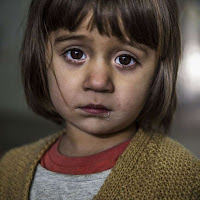

The manual Save the Children trusted me to edit would aid child care workers in conducting activities with children in refugee camps to support cognitive development and foster emotional resiliency, Gargantuan tasks under such dire circumstances. I got the task because I'd experienced first-hand the trauma of young children separated from parents. For five years I'd been the psychiatric social worker for the nursery at Los Angeles' locked facility for abused and neglected children awaiting placement by the juvenile court.

The sole clinician working on Sunday, I'd responded to the needs of the entire institution, so also dealt with the anxiety and anguish of bewildered K-12 age children, as well as my nursery infants and toddlers.

So when I think about children worldwide who face crisis because of war, natural disaster or family breakup, no matter what the circumstances, I remember those children I worked with in the early '80s. I can still see their faces contorted by fear and rage. I remember those wrinkled brows, twisted lips.

Right now Save the Children works with refugee camps in Syria, South Sudan, Uganda, Burundi, Tanzania, Lebanon, Bangladesh, Egypt, Ethiopia, Kenya and Myanmar. And in rural America, beginning in the 1930s in Appalachia. Here's a plea from its website:
Right now, Save the Children remains gravely concerned about the well-being of children in the custody of the U.S. government after crossing our southern border. We know from our nearly 100 years of service that family separation and detention can cause severe, long-lasting trauma, which ultimately results in the loss of childhood.
For nearly 100 years, Save the Children has put the rights of every child at the very center of our mission. We’ve now heard these children’s cries and we must raise our own voices to protect their best interests. Because every child deserves safety and a chance at a future.
Tell Congress to reunite families and ensure unnecessary family separation never happens again.


I share this concern. I'm particularly concerned about ACEs, the adverse childhood experiences that impact healthy development. These ACEs effects can last an entire lifetime.

  • Physical abuse
  • Sexual abuse
  • Emotional abuse
  • Physical neglect
  • Emotional neglect
  • Intimate partner violence
  • Mother treated violently
  • Substance misuse within household
  • Household mental illness
  • Parental separation or divorce
  • Incarcerated household member
For more information about ACEs:
https://www.samhsa.gov/capt/practicing-effective-prevention/prevention-behavioral-health/adverse-childhood-experiences
 
To learn more about what you can do to help Save the Children:
https://www.savethechildren.org/us/about-us/why-save-the-children

When I worked at MacLaren I learned some important lessons about nurture and separation trauma. When places that shelter children apart from families are equated with "summer camps," I shudder. Here's my personal experience at MacLaren, 1978 to 1983.


Elsewhere

 I hung up the phone and stared at a poster on the wall beside my desk. The receptionist at the visiting center had called to let me know that a mother had appeared for her court-ordered monitored visit. For the past three years I'd been the psychiatric social worker for the nursery at the Los Angeles County residential institution that housed children awaiting placement by the juvenile court. Not often a sunny job.

 I could already anticipate how the visit would go. The visitor would be angry. We had her child in our locked building. It wouldn't matter to her that the two-year-old had been removed from his home because he’d been left alone for hours and neighbors had called to police to report hearing his cries. No. All that would matter is that mother and child were separated. We had him. She didn’t.

The nursery aide who would escort the toddler to the visiting room would treat both me and the visitor to hostile glares. Most of the nursery staff resented visiting days. The children cried when their parents left, leaving them behind. I'd conducted training on bonding and attachment, and explained that though these children might be too young to remember events, they would forever remember feelings. Nonetheless the staff still believed in "out of sight, out of mind."

"It would be better if the parents didn't come at all," they said. "Besides, they don't deserve to see their kids."

And, yes, the toddler himself after the visit would squall and kick and flail at me with tiny fists all the way back to the nursery. I could understand why the attendants held me responsible for provoking the tantrums.

"I hate you, I hate you," those children old enough to talk often screeched when their visits ended, as I returned them to the nursery where they’d turn their rage and frustration on the hapless attendants and nurses.

On Sundays, when I conducted these visits, I forced myself to become a jumbo sponge to soak up everybody's ire, taking care not to ooze any out myself. That would be unprofessional behavior for a psychiatric social worker.

The three earlier visits I’d monitored so far, that late November day, had been particularly unpleasant. With Thanksgiving fast approaching, parents had fixed me with sullen eyes, dropping references to having little to be thankful for.

I had trained myself to hold my tongue. Many of these parents were in sad need of parenting themselves, some so woefully uninformed about the stages of early childhood development that they expected a two-year-old to follow instant and sometimes complicated commands.

Usually the poster by my desk brightened my spirits, with its sunflower motif and splashes of bright lettering in yellows and reds. A local artist had been engaged to design it for MacLaren's annual Sunflower Day, a summer Sunday when actors, artists and musicians visited to entertain and mingle with the two hundred and fifty or so children in temporary residence. Today, though, even the poster's glowing gold and shimmering scarlet hues failed to cheer me. Instead I held on to a vision of a sodden gray sponge as I trudged towards the visiting center.

I glanced out the window at the darkening clouds, and realized that by the time my shift ended and I headed home, it would probably be raining. I dreaded driving the oil-slick Los Angeles freeways in the autumn.

No sunshine for me today, I thought.

I reminded myself again that only three elements needed to converge to create a situation that could lead to child abuse or neglect: a child, a parent with poor coping skills, and stress. Many of the parents I saw were ignorant of the most basic child-care routines. Many suffered from untreated character disorders or alcohol or drug addictions. Most were so deprived in their own childhoods that they had no alternative to repeating their own parents' pattern of poor care.

What was evident, though, was that most of them indeed loved their children. Some cared enough that they'd even enter treatment programs or ditch an abusive partner, so they could rehabilitate themselves and eventually make a home again for the child. In my Parent Outreach project, I offered such resources to the visiting parents.

To my surprise, the visiting mother's face was wreathed in smiles. It had been a few weeks since she'd visited. I'd tried to reach her, but her phone had been disconnected.

"Guess what?" Her smile illuminated the little room. "I've been released from the recovery center and I've got a job! I've got a gift for Tommy." She held up one of the new plush Care Bears. This one, bright yellow, was Funshine Bear. I well knew the stars of the new Care Bear television series, sitting on the nursery floor, and watching the cartoons with the kids. Funshine Bear had a tummy symbol with a smiling sun. He was famous for always trying to help someone, being able to use his symbol to light up the darkest night or shine a beacon for all to see.

Kind of like me, I thought, the first time I noticed him. I'd wondered who lit up Funshine's dark days. Could he turn his beacon toward himself? The aide who brought Tommy to the visiting room was new on the job. Her eyes twinkled when she spotted the bear. "Oh, look, Tommy," she said, a pleasant lilt to her voice.

Tommy squealed, grabbed Funshine Bear, and hugged him close. He clambered up on his mother's lap and answered her questions as best he could.

"We walked to MacDonald's yesterday. I ate ice cream!"

I waited for the mom to begin a rant about how she didn’t allow her kid to eat sugar. Instead she smiled at her son, hugged him, and then smiled at me.

"The nurses decided it would be a good day for an outing since the sun was out in the afternoon and the restaurant is only a block away," I explained. The Saturday nursery staff often liked to get a little exercise and fresh air, and would stroll to the nearby fast food place, pushing the younger children in buggies and strollers.

Besides, they remembered that most of the children were familiar with MacDonald’s, and that any familiar experience helped them with the trauma they suffered being separated from their families.

This visit even ended in an exceptional way. Tommy didn't even cry when his mother kissed him goodbye. She'd promised to come again soon, and confided to me that she thought the court would release him to her soon. Her probation worker was ready to vouch for her.

“Congratulations,” I said. “I hope the hearing goes well for you.”

Tommy didn’t even scream when she left.

A couple of years earlier, still new on the job, I’d complained to my consulting psychiatrist that sometimes I felt unappreciated – by staff, by the children, by the parents.

"Honey," he'd said, "in this line of work you've got to get your loving elsewhere. You've got to get it from yourself. Appreciate yourself!"

At that time, I vowed to not a let a working day go by without doing three kind things: one for a staff member or parent, one for a child, and one for myself. I found I felt more in control if I had definite goals for my days that otherwise could spin into chaos.

This Sunday when I returned for my last evening report in the nursery I made a special effort to single out the aide who had been so cheerful in bringing Tommy for his visit.

"You made it so easy for him to leave," I praised her. "Letting him take the bear back with him to his crib was a really great idea!"

I spent several minutes before my shift ended rocking one of the four-year-old girls. She'd fallen in the playground earlier and bruised her forehead. She’d had a bad day.

“When will Mommy be here?” she’d implored, eyes shiny with unshed tears.

They never showed up. This wasn’t an isolated case, where parents failed to appear. Sometimes cars would break down. Sometimes buses ran late. Sometimes they got drunk or high again, and forgot their appointments.

"I love you," the little girl whispered in my ear as I tucked her into her youth bed. I gave her a final hug.

Then I climbed into my car and turned on my windshield wipers, anticipating what kind thing I'd do for myself that day. I usually saved me for last, enjoying the anticipation.

"A Christmas Story" had just been released. It played in a theater close to my home. I decided to get an early jump on the holidays and see it. Then I'd treat myself to a hot bubble bath and a mug of cocoa before bed.

Perhaps tomorrow would be sunnier. Sunshine already was breaking through in my heart. I remembered my grandmother’s old mantra that even on a cloudy day the sun is shining somewhere.

 ********